
SVC-Update
Weekly Recap & Outlook

No financial advice.
Despite a relatively uneventful news flow this week, most equity indices, particularly in tech, are trading firmly in positive territory. Even the renewed strength in oil prices, driven by Iran’s refusal to engage in further peace negotiations, appears to have had little impact on equities, at least when it comes to tech. Because, in many ways, we have returned to a familiar market regime where anything related to AI continues to rally, while the rest of the market lags behind.
That said, it is worth asking why equities were so quick to dismiss the still unresolved geopolitical tensions between the United States and Iran after only a brief pullback. Two potential explanations come to mind.
The market may be anticipating that pressure on Iran will increase significantly due to the risk of imminent shut ins, which could begin within the next two weeks.
Alternatively, one could argue that the US economy has, for now, remained largely insulated from rising energy prices. The impact is mainly felt at the gas pump, while higher fuel costs are likely more than offset by the tax relief measures introduced under Trump’s One Big Beautiful Bill.
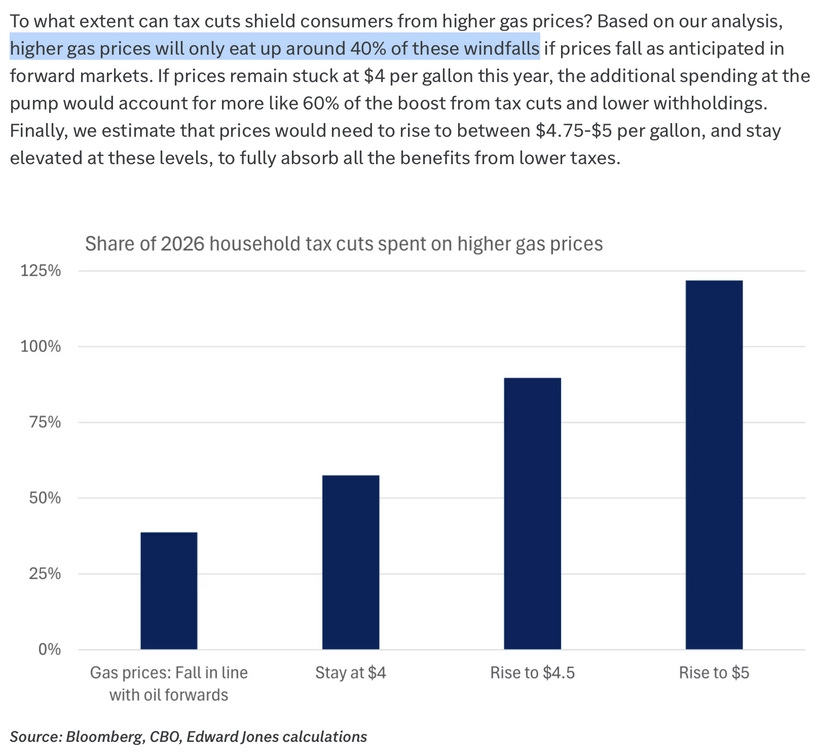
Whatever the underlying reason, the key takeaway is that geopolitics appears to be fading into the background for now. This is particularly relevant as attention may soon shift towards a potentially significant development on the monetary policy front, namely the prospect of a new Fed Chair.
To recap, amid investigations by the Department of Justice into whether Jerome Powell may have provided misleading testimony to Congress last year. Powell’s refusal to respond to a formal questionnaire from the investigating prosecutor effectively led to a political deadlock. A compromise solution now seems to have emerged, and the charges against Jerome Powell appear to have been dropped. As a result, both sides may find a face saving outcome, and there should be little standing in the way of Warsh’s confirmation.
Institutional Positioning
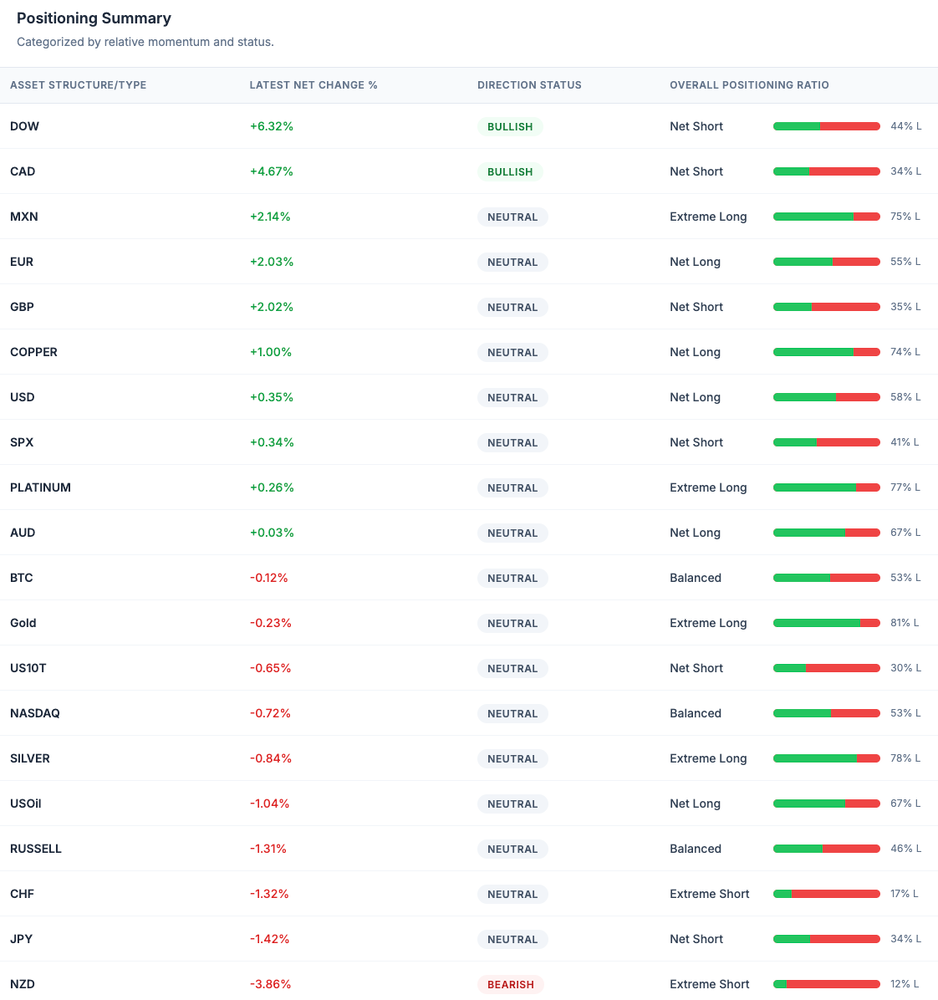
Before turning to this week’s macroeconomic data, below is an overview of recent positioning shifts across major asset classes, based on our proprietary Gauch Research COT Visualizer.
CAD CPI y/y (Previous: 1.8%, Forecast: 2.5%, Actual: 2.4%)
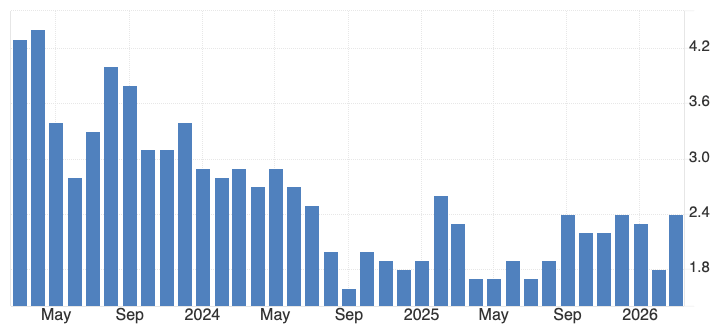
Canada’s headline inflation rate rose sharply to 2.4% in March 2026 from 1.8% in the prior month, matching the highest level in a year but coming in slightly below expectations of 2.5%. The increase reflected the early impact of the Middle East conflict on consumer prices, as disruptions to tanker flows from the Persian Gulf led to global energy shortages. Energy inflation rebounded to 3.9% from a prior deflation of 9.3%, pushing transportation inflation up to 3.7% from -0.8% in February. This was accompanied by faster price growth in shelter at 1.7% from 1.5% and in recreation and education at 2.6% from 0.5%. At the same time, base effects linked to the reintroduction of GST and HST taxes continued to influence food prices, with food inflation easing to 4.0% from 5.4%. On a monthly basis, CPI increased by 0.9%, largely driven by a 21.2% jump in gasoline prices.
NZD CPI y/y (Previous: 3.1%, Forecast: 2.9%, Actual: 3.1%)
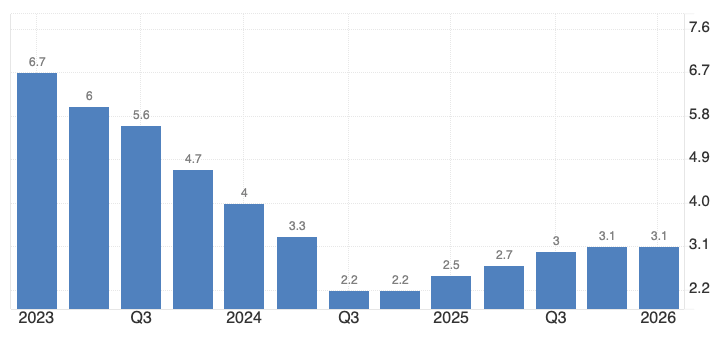
Annual inflation in New Zealand came in at 3.1% in Q1 2026, unchanged from the previous quarter’s 1.5 year high and above expectations of 2.9%, exceeding the RBNZ’s 1 to 3% target range. The main drivers were housing and household utilities, which rose 3.4%, supported by a 12.5% increase in electricity prices and an 8.8% rise in local authority rates and payments. Food prices remained elevated at 4.0% compared to 4.3%, mainly due to higher meat and poultry costs, while transport inflation accelerated to 3.3% from 2.6% on the back of rising private transport expenses. Additional upward pressure came from alcoholic beverages and tobacco at 2.8% from 2.4%, health at 4.1% from 0.7%, and miscellaneous categories at 2.2% from 2.1%, while inflation moderated in clothing at 1.3% from 1.7%, communication at 4.6% from 4.8%, and recreation and culture at 2.2% from 3.2%, with education steady at 2.5%. On a quarterly basis, CPI rose 0.9%, accelerating from 0.6% previously.
GBP UE Rate (Previous: 5.2%, Forecast: 5.2%, Actual: 4.9%)
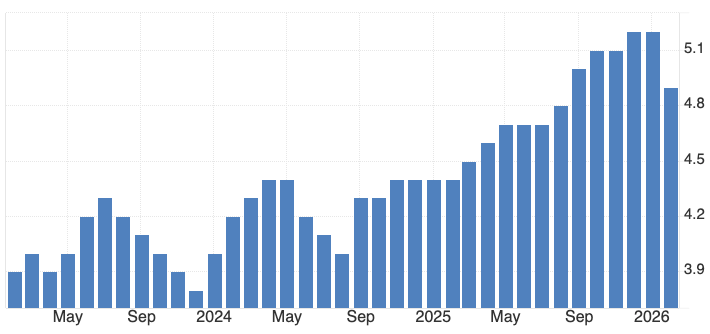
The UK unemployment rate declined to 4.9% in the three months to February 2026, below expectations of 5.2%. The drop in unemployment coincided with an increase in economic inactivity, suggesting that some individuals exited the labor force rather than secured employment. The number of unemployed fell by 60,000 to 1.78 million, mainly among those out of work for less than six months, while 95,000 additional individuals left the labor market, pushing total inactivity to 9.116 million and lifting the inactivity rate to 21.0%. Employment rose by 24,000 to 34.328 million, with the employment rate edging up to 75.0%, largely due to gains in full time jobs, while the number of people holding second jobs declined to 1.273 million, representing 3.7% of total employment.
GBP CPI y/y (Previous: 3.0%, Forecast: 3.3%, Actual: 3.3%)
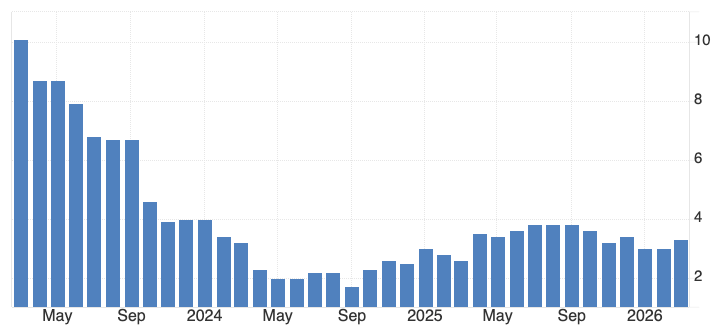
UK inflation increased to 3.3% year on year in March 2026 from 3.0%, in line with expectations and marking a three month high. The rise was partly driven by transport costs, which climbed 4.7%, the fastest since December 2022, with motor fuel prices up 4.9% as a result of the conflict with Iran. Petrol prices rose by 8.6 pence per litre and diesel by 17.6 pence. Housing and household services increased by 4.3% from 4.2%, driven by a 95.3% surge in domestic heating oil, the strongest since September 2022. Food and non alcoholic beverages rose 3.7% from 3.3% and services inflation increased to 4.5% from 4.3%, while clothing prices fell by 0.8%, the largest decline since March 2021. On a monthly basis, CPI rose 0.7%.
USD Retail Sales (Previous: 0.7%, Forecast: 1.4%, Actual: 1.7%)
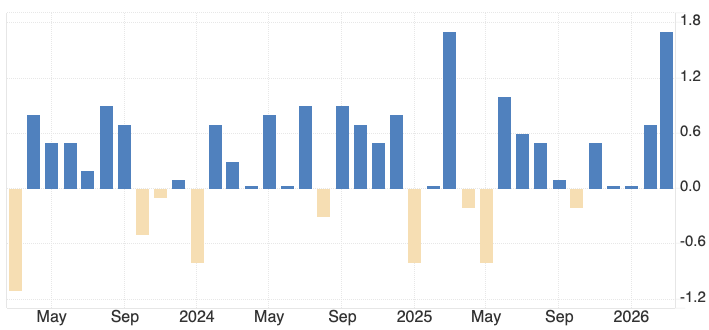
US retail sales increased by 1.7% in March 2026, exceeding expectations of 1.4% and following a revised 0.7% gain in February, marking the strongest growth since March 2025. The increase was largely driven by a record 15.5% surge in gasoline station sales as fuel prices rose amid the Iran conflict, while overall consumer spending remained resilient across most categories, likely supported by larger tax refunds. Gains were recorded across motor vehicles at 0.5%, furniture at 2.2%, electronics at 0.9%, building materials at 0.7%, food and beverages at 0.7%, health and personal care at 0.5%, general merchandise at 1.0%, and nonstore retailers at 1.0%, while restaurant and bar sales edged up 0.1%. Core retail sales rose 0.7%, above expectations of 0.2%.
USD Flash Manufacturing PMI (Previous: 52.3, Forecast: 52.5, Actual: 54)
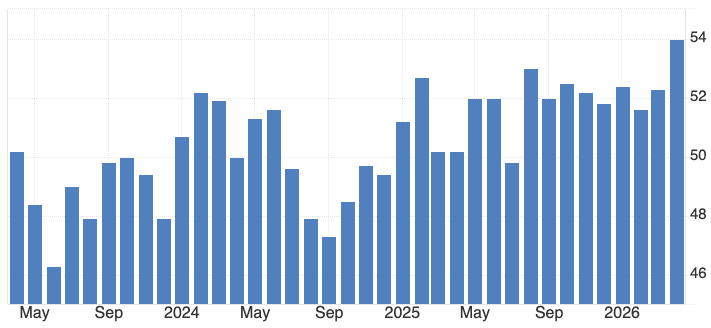
The S&P Global US Manufacturing PMI increased to 54.0 in April 2026 from 52.3, beating expectations of 52.5 and marking the strongest improvement in factory conditions since May 2022, driven by a four year high in production and the fastest growth in new orders since May 2022. Inventory accumulation also contributed positively, while supplier delivery times lengthened significantly, partly due to supply disruptions linked to the Middle East conflict. Employment was the only negative component, declining for the first time since July 2025.
USD Flash Services PMI (Previous: 50.5, Forecast: 50, Actual: 51.3)
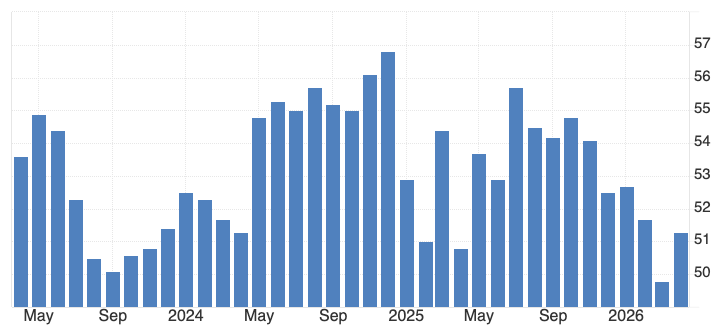
The S&P Global US Services PMI rose to 51.3 from 50.3, well above expectations of 50, reflecting a rebound in services activity following the initial impact of the Iran conflict. New business increased slightly but remained below the average of the past two years as affordability concerns persisted, while input costs rose at the fastest pace since December, prompting firms to raise prices at the strongest rate in 45 months. Employment edged higher and business sentiment improved modestly, although it remained well below levels seen last year.
Summary & Outlook

Upcoming News
FED, ECB, BoJ, BoC, BoE Policy Rate + Statement
AUD CPI
USD, CAD GDP
USD Core PCE Price Index
Wishing you a successful week ahead,
David Gauch
Founder, Gauch Research